

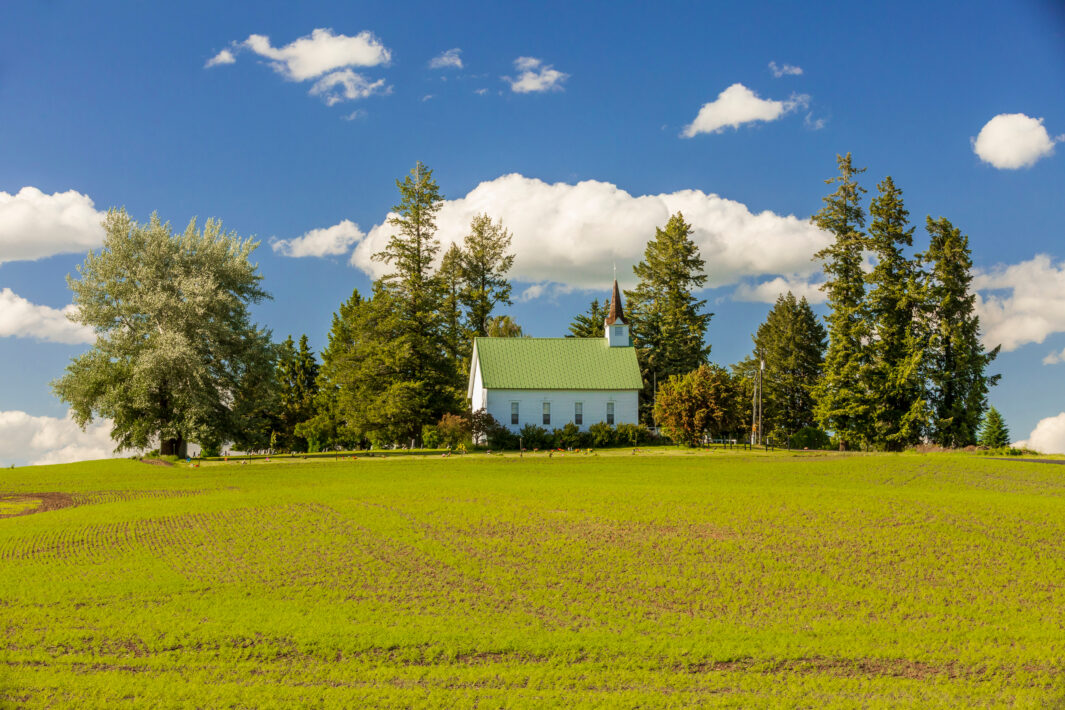
“If you’ve seen one rural church, then you’ve seen one rural church.”
A friend of mine said these words at a meeting years ago, and they’ve stuck with me. I’ve loved the rural church, and I’ve been in it my whole life. When he said those words, I realized he couldn’t be more right.
Every rural church has a different flavor, history, and direction. Yet, serving the churches of the North American Mission Board in the rural space has shown me that while each church is unique—each as different as a fingerprint—there are some commonalities.
We call those things the Core Four.
Sometimes they’re expressed differently, or sometimes we approach them with different techniques. But these Core Four seem to be common threads sewn into the tapestry of rural ministry.
1. Isolation
Ministry can feel isolating no matter where you’re from, but when you add in miles of separation and scarcity of population, that feeling seems to get real. While there are always options to connect with an association, and even members of other tribes who love Jesus, having to be intentional about like-minded conversation and practice makes you feel isolated.
One of the interesting statistics about rural ministry is that you can take every urban location in the United States and put it in an area the size of Colorado. That leaves the 60 million people in rural areas occupying 97% of the continental United States, and by definition, that’s isolated.
We’ve created resources to help bring together those in isolation:
Regional Rural Summits: Hoping to take the conference life to them in a way that’s affordable and doable
The Rural Pastor Podcast: Giving a national voice to a local effort (TheRural.church)
Rural Breakouts: Including specific tracks at the major events that already exist at both the state and national levels
If you’re rural, we see you.
2. Vocational Identity
Because of economics, church size, and reality, many rural pastors are volunteers, stipended, or part-time. But the bivocational pastor is the workhorse of the Southern Baptist Convention. Although many who do bivocational work feel “lesser” somehow, it’s just not true. There’s no such thing as part-time ministry—just part-time pay.
It’s those following the tentmaking pattern of the Apostle Paul who actually most closely resemble the New Testament pastors we read about. It is one of the difficulties of rural ministry, but one where we’re hoping to encourage every pastor in the value of what they do.
We are catering events for the schedule of a bivocational pastor. We are including the bivocational motif in our resources and writings. And we are celebrating the pastor/leader/minister at every level—because they are the ones God chose to lead His people in that place!
3. Low Resources
A smaller church comes with a smaller budget, and that may feel like low resources. But we want to encourage the rural pastor in the fact that the average Southern Baptist church is less than 70 in attendance so, churches of 30–100 are right in the fat middle of what a normal church looks like.
Still, not having the budget to do the things you want, support the ministry that you want, and often being in communities that seem to be struggling with a low tax base, low opportunity, and a brain drain of young people moving away—things can seem bleak.
But if a church has a building, they automatically have a resource to share with the community. The church gathered is probably the largest volunteer army in the area. And they also know the God who owns the cattle on a thousand hills. Low resources is one of the Core Four, but it’s not as limiting as it may seem.
4. Hopelessness
This issue is dire, and it’s the latest addition to the list. After speaking with the Executive Directors of several state conventions and many Associational Mission Strategists, we’ve realized that very often those who serve diligently, pray fervently, and live sacrificially are still on the edge of hopelessness.
Not hopeless in Christ—by no means! But they are beginning to drift into an expectation that “this is the way it is” and “this is as good as it gets.” We often encourage those in difficult situations to pastor the flock you have, not the one you wish you had.
But that becomes even more difficult when you become hopeless about the flock that is right in front of you. That’s why we encourage personal renewal and revival before any programmatic church change. We want to see pastors excited about their faith and calling before they ever try to encourage others in theirs.
In the End
The Core Four are markers of reality, but they aren’t insurmountable challenges. They are a look at the reality of the landscape of rural ministry, but also the baseline for the amazing things that God can do through the called men and women serving in those spaces.
Identifying the problem means we have a target to pray for, a battle to fight, and a victory to win. Everyone serving in the rural space needs to know that they’re not the only ones there and that every church matters, everywhere.
Many rural leaders are never going to find themselves on the platform at a big conference, or mentioned in some article about the fastest, quickest, or biggest growing whatever. But in heaven, they are celebrated and acknowledged. With every gospel conversation, every baptism, every faithful Sunday sermon, they are fulfilling the calling that has been entrusted to them.
And NAMB Rural counts it a privilege and an honor to stand behind them.
Join the rural conversation by being part of The Rural Pastor Podcast, or send us a note and start the conversation personally at [email protected].